Dated 31st December, 2025
Dr. Syama Prasad Mookerjee National Institute of Water and Sanitation (SPM-NIWAS), Government of India, in collaboration with the United Nations Office for Project Services (UNOPS), organised a National Workshop on Participatory / Jan Bhagidari Tools under the Jal Jeevan Mission (JJM) on 22–23 December 2025 at Zone by The Park Hotel, New Town, Kolkata. The workshop aimed to bring together practitioners, government officials, sector experts, and field functionaries from across States to share, deliberate, and document participatory and Jan Bhagidari tools being adopted at various stages of rural water supply schemes under JJM. 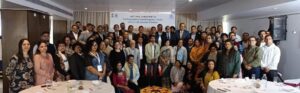 The discussions focused on the application of participatory approaches in planning, implementation, monitoring, operation & maintenance (O&M), and long-term sustainability of drinking water supply systems. A key outcome of the workshop was to contribute towards the development of a national compendium of participatory tools and approaches, capturing best practices, field innovations, and learnings from diverse State contexts to strengthen community ownership and institutional capacity under JJM.
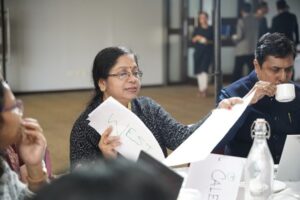 SIGMA Foundation was one of the invitee organization and Dr. Debasri Mukherjee, Assistant Director (WASH), was nominated to attend the workshop on behalf of the organization. During the technical sessions, she highlighted the significance of Participatory Rural Appraisal (PRA) tools in effective planning and implementation of JJM, particularly in ensuring community engagement, inclusiveness, and informed decision-making. Drawing from local and field-level experiences, she emphasized how PRA tools can help identify community-specific challenges, improve service delivery outcomes, and strengthen the sustainability of rural water supply schemes. Her presentation underscored the importance of context-specific participatory approaches, especially in addressing issues related to source sustainability, user behaviour, operation and maintenance, and equitable access. The insights shared contributed to the broader national dialogue on institutionalizing Jan Bhagidari as a core pillar of Jal Jeevan Mission implementation. The workshop concluded with a collective resolve to mainstream participatory tools across States and to strengthen knowledge-sharing platforms to support the goals of safe, adequate, and sustainable drinking water for all rural households.