
-
Opening hours
Mon - Fri: 10 am - 6 pm -
Email
info@sigma.foundation -
Call us
+91 33 3152 2348 / +91 33 4007 6685
News
Drainage Emerges as Key Priority in Rajarhat-Newtown Infrastructure Assessment by SIGMA Foundation
Dated: 30th September, 2026
A comprehensive infrastructure assessment with field survey of Rajarhat block within the New Town Rajarhat Assembly Constituency has been taken up by SIGMA Foundation, with advisory support from experts belonging to IIT Delhi and other experts. 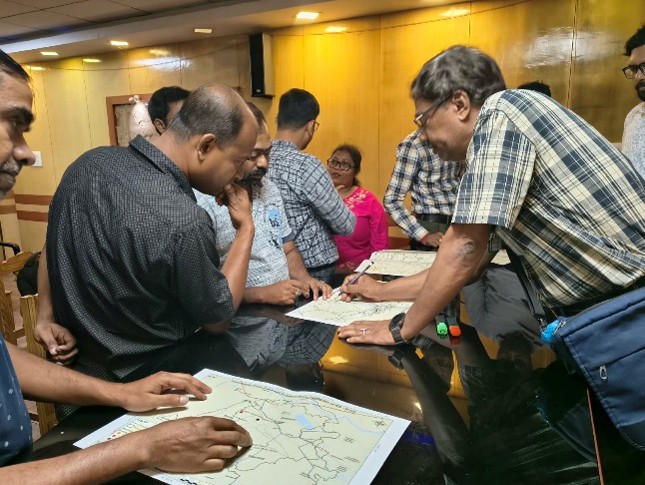 The assessment covered infrastructures and service delivery gaps of roads, drinking-water supply, drainage and electricity infrastructure across the five Gram Panchayats. The study involved examination of documents from respective departments, field survey, preparation of Land Use and Land Cover using satellite image processing and spatial analysis using GIS and community consultations. The assessment has identified drainage capacity gap as a key problem, which is resulting in waterlogging in many areas. The study has recommended having an integrated drainage system than the isolated channels with constrained hydraulic capacity. The tentative design of the required drainage channels with alignment and length have been proposed Gram Panchayat-wise in the report submitted. The proposed length of the drainage channel 79 km, comprising 35.7 km of primary drains and 43.2 km of secondary channels, with proposed discharge towards Bagjola Khal and Nowai Khal.
With built-up areas across the five GPs increasing by 119% between 2005 and 2025, the assessment calls for coordinated infrastructure planning to address the changing drainage and other service requirements associated with continued urban growth.
SIGMA Foundation Initiates Livelihood Development in Basanti Block, South 24 Parganas
Dated: 28th September, 2026
SIGMA Foundation has initiated the preparatory process for a Livelihood Development Initiative in Basanti Block of South 24 Parganas, West Bengal, aimed at strengthening livelihood opportunities and economic resilience among vulnerable rural households. Located in the delta region of West Bengal, Basanti faces several livelihood challenges, including limited economic opportunities and income insecurity among rural families. 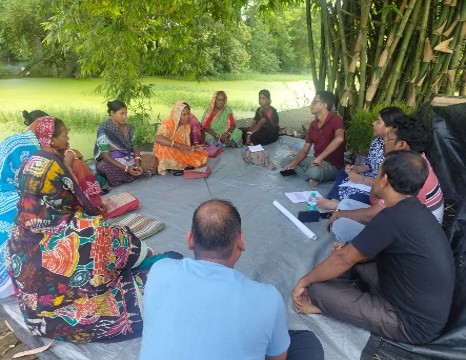 The proposed initiative seeks to develop context-specific and sustainable livelihood opportunities, especially for women, based on the needs, capacities, and aspirations of local communities.
As an initial step, SIGMA Foundation has conducted a household-level survey covering 50 households in the proposed project area. The survey examines existing livelihood patterns, household income sources, skills and capacities, available resources, key challenges, and aspirations of participating families.
Using the study data, we are now identifying suitable livelihood opportunities and designing interventions that are locally relevant, feasible, and sustainable. The initiative will focus on community participation, livelihood strengthening, capacity development, skills enhancement, and sustainable income-generation opportunities with resilience to climate change.
Project activities will be finalised following analysis of the survey findings and consultations with relevant community stakeholders. Through this initiative, SIGMA Foundation aims to contribute to improved livelihood opportunities, enhanced household capacities, and greater economic resilience among vulnerable communities in Basanti Block.
SIGMA Foundation Facilitates Practical Livestock Management Training for Farmer in Purulia
16 September 2026 | Purulia, West Bengal
For the first time, SIGMA Foundation, Kolkata, in collaboration with Krishi Vigyan Kendra (KVK), Kalyan, Purulia, facilitated practical livestock management training for farmers to promote scientific farming practices and improve livestock productivity.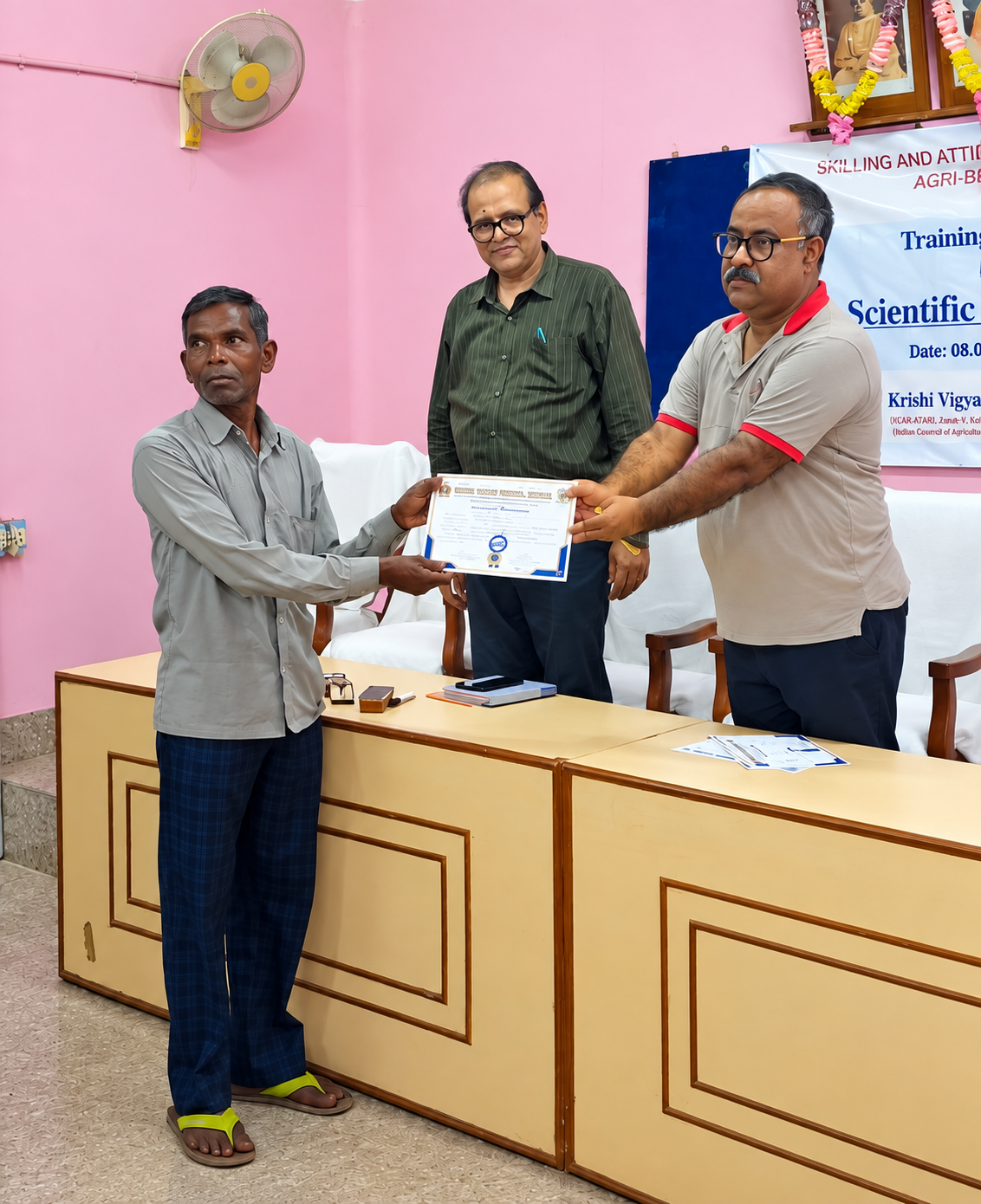
As part of this initiative, Mr. Lakhiram Singh Mura, a farmer from Dantia village, participated in a four-day residential training programme covering goat rearing and cattle farming.
The training provided hands-on guidance on scientific rearing of Black Bengal goats, vaccination and deworming, construction of low-cost livestock sheds, livestock growth monitoring, and improved cattle-rearing practices. The programme aimed to strengthen farmers’ technical knowledge and encourage the adoption of scientific livestock management methods.
“I am sincerely grateful to the SIGMA Foundation for providing me with this valuable training opportunity. I had never attended such a meaningful and useful training programme before. The practical knowledge shared by experienced agricultural experts will greatly help me improve my farming practices.”
— Mr. Lakhiram Singh Mura, Farmer, Dantia Village
Following the training, Mr. Mura expressed confidence in applying the knowledge gained to his own farming activities and sharing his experience with other farmers in his village. The initiative reflects SIGMA Foundation’s commitment to strengthening rural livelihoods through practical knowledge, capacity building, and improved agricultural practices.
SIGMA Foundation completes a unique study on the Children in Conflict with Law in the State of Odisha
Dated: 29th August 2026
The Hon’ble Juvenile Justice Committee of the Orissa High Court directed the Government of Odisha to have a systematic examination of the situation of children in conflict with law across the State. On request of the State Government, a study was commissioned by UNICEF Odisha and SIGMA Foundation was engaged for the assignment through a process of competitive bidding. The study has five objectives:
• Document the socio-economic profile, family background, and developmental history of the CCLs.
• Identify the causal factors- Individual, family, environmental, and structural factors.
• Examine the pattern of offences, including POCSO and recidivism.
• Understand children’s experience with the JJ system and perspectives shared by the parents and JJ system staff.
• Recommend a way forward
The study involved visiting all the 15 Homes for the children who allegedly come in conflict with law (seven Observation Homes, seven Special Homes, and one Place of Safety) spread across the districts of Sundargarh, Angul, Boudh, Kalahandi, Ganjam and Malkangiri. A mixed method approach with Interpretative Phenomenological Analysis (IPA) was adopted for the study. Data collection involved – analyses of data from the 151 Case Files of the children in Conflict with Law (CCL) including the Social Investigation Reports (SIRs) which were available at the Homes visited, interaction with 300 alleged juvenile offenders who were at those homes during the visits and In-depth Interview of 64 of them selected purposely for representing various types of Cases, In-depth Interview of 30 parents and 4 siblings of the alleged CCLs and 64 key officials like judges, police officials, lawyers, officials of the homes and other duty bearers associated with the juvenile justice system.
A presentation on the key findings was made before the Hon’ble Juvenile Justice Committee on the 21st May, 2026 by the President, SIGMA Foundation and other officials of the organization. The findings were also presented before the Principal Secretary Women and Child Development Department of the Government of Odisha on the same day. Based on feedback received from the said discussions as well as from UNICEF, the report has been finalized and submitted to UNICEF for further necessary action. This is a unique study and is likely to be the first of its kind about the CCL. It brings out several issues which will help policy makers to address various issues of the children who come in conflict with law.
From Knowledge to Impact – Feature Article on SIGMA Foundation on global space
Dated 24th July 2026
 Sustainable World Alliance (SWA) is a global platform to provide collaboration space with tools for organizations & individuals to accelerate sustainable development goals. SWA’s flagship Sustainability Rating System helps build consumer trust in sustainability and empowers organizations & individuals with a sustainability trust badge. The SWA promotes sustainability as a new normal and build a better world for ourselves and future generations.
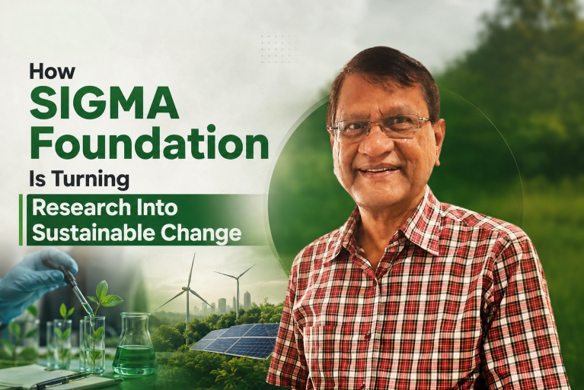
SWA has published in the Feature Article section of their home page highlighting how ‘SIGMA Foundation is turning their research into sustainable change’. Read: https://sdgicity.com/feature-articles/from-knowledge-to-impact/
SIGMA Foundation Showcases Innovative Greywater Recycling Model at International Conference in Germany
Hamburg, Germany | 29 June 2026
SIGMA Foundation presented its innovative model for domestic greywater recycling at the 15th Hanseatic India Colloquium, held in Hamburg, Germany, on 29 June 2026. The conference, themed “Indo-German Dialogue: Circular Wastewater Management for Sustainable Development,” brought together researchers, practitioners, and policymakers from India and Germany to exchange knowledge and experiences on sustainable water management. 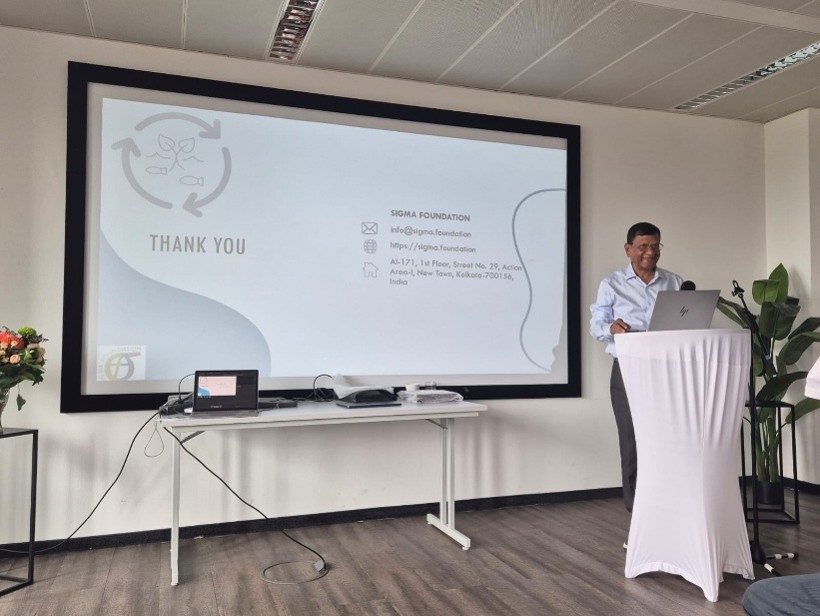
Dr. M. N. Roy, President of SIGMA Foundation, was invited by the organizers to present the Foundation’s pioneering work on decentralized greywater recycling for sustainable agriculture.
During his presentation, Dr. Roy highlighted a demonstration project implemented in Jangipara Gram Panchayat with support from Sign of Hope, Germany. The system uses a simple filtration arrangement using sand, gravel and charcoal to treat domestic greywater, making it suitable for irrigation. Laboratory analysis showed that the coliform level in the treated water was reduced from 3,300 MPN/100 ml to 49 MPN/100 ml, which is well below the acceptable limit of 1,000 MPN/100 ml for irrigation.
The treatment unit recycles approximately 250 kilolitres of greywater annually, providing year-round irrigation to a 5-kattha (0.165-acre) agricultural plot. This has enabled the cultivation of leafy vegetables and other crops throughout the year, generating an annual income of around ₹80,000 for the participating household.
An additional benefit of the system is its ability to retain a portion of the nutrients present in domestic greywater, including phosphates and nitrates. These recycled nutrients have contributed to an estimated 50% increase in the yield of leafy vegetables, such as spinach and water spinach. Since the treated water flows to the field entirely by gravity, the system requires no external energy for pumping or water transport, making it both environmentally sustainable and cost-effective.
The project demonstrates how a simple, low-cost technology can strengthen climate resilience in agriculture by providing a reliable source of irrigation without extracting groundwater. At the same time, it enhances crop productivity through nutrient recycling and supports circular resource management.
SIGMA Foundation Completes a Research on Women and Tribal Land Rights in Jharkhand
Dated:25th June 2026
SIGMA Foundation recently conducted a study with support from Landesa, an organization which works on land rights across the world. To examine the land rights of tribal women and land related conflicts that adversely affect the tribal women. The study was for tribal women living in Jharkhand. The study included analysis of secondary data, including media on land disputes, and collection of primary data from Lohardaga and Gumla districts. The study sought to understand the current status of land rights for tribal women in the region, how customary practices affect their land rights, to what extent witch hunting is associated with land issues and how administration of land protects the rights of tribal women.
The study aimed to understand the legal framework, map different types of land issues and associated violence, and examine key land regulatory frameworks — including the Chotanagpur Tenancy (CNT) Act, Santhal Parganas Tenancy (SPT) Act, Panchayats (Extension to Scheduled Areas) Act (PESA), and the Forest Rights Act (FRA) — with the goal of developing a policy brief to support programmatic and policy engagement.
SIGMA’s research team began with an intensive secondary literature review, systematically examining over 400 Hindi newspaper articles on land related violence across seven regional newspapers published between 2023 and 2025, all related to land violence. The patterns that emerged were corroborated through an extensive review of secondary literature on land rights, forest rights, land governance systems, and their implications in Jharkhand. Together, these two streams of evidence provided a clearer picture of the present status of land rights in the CNT region.
The research team subsequently conducted field validation in Lohardaga and Gumla, engaging with a range of stakeholders — from key government officials, police to women survivors of land rights violations and facing allegations like witchcraft and documented case stories. The findings have been compiled into a report which also include key recommendation to be acted upon in the short, medium and the long-term.
SIGMA Foundation is glad to have worked in partnership with Landesa on this important stud and to bring out new evidence on a subject which is under-researched and less understood.
ADDCWES of IIEST Shibpur and SIGMA Foundation Reviews Implementation of Water Harvesting Project in Purulia
Dated: 30th May 2026
The ADDCWES centre of IIEST Shibpur, which is dedicated for advancement in water and environment studies is implementing a pilot project on rainwater harvesting in Jhalda I block of Purulia district in partnership with SIGMA Foundation. The progress of the project was reviewed on the 29th May at IIEST, Shibpur.
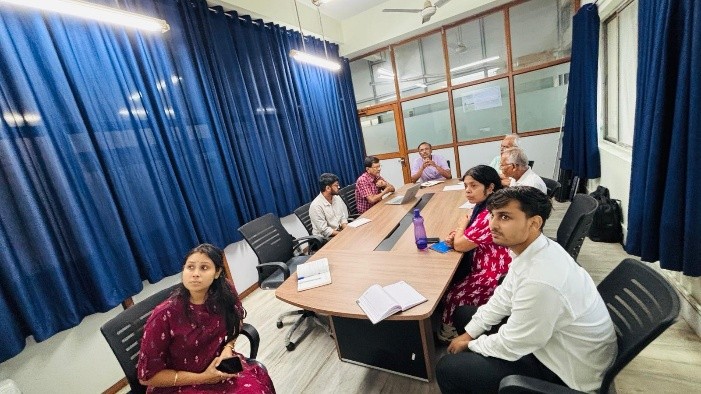 The meeting was attended by key dignitaries including Prof. Arun Deb, Governing Body Member, ADDCWES, IIEST Shibpur; Prof. Anirban Gupta, Centre Director, ADDCWES and Dean – International Relations & Alumni Affairs, IIEST Shibpur; Er. Shyamaprasad Dutta, Governing Body Member and Dr. M. N. Roy, Founder-President, SIGMA Foundation, Dr. Debasri Mukherjee, Assistant Director – WASH and other members of SIGMA Foundation and IIEST.
The project is being designed as a pilot initiative promoting use of locally available materials, which is to evolve into a scalable and replicable model for water-stressed regions for which the Gram Panchayat will also be capacitated. The design is going to be finalized after site validation within a month.
The project places a strong emphasis on applied, field-based research to understand various factors that can provide long-term sustainability of the project and to measure the impact on local people. A critical component will be groundwater monitoring, where local Gram Panchayat representatives will be trained to record and manage rainfall and groundwater table data over time, enabling evidence-based water conservation initiatives. Community engagement will be central, with awareness campaigns and training on climate-smart agriculture and natural farming practices. Together, these research efforts aim to generate actionable insights, strengthen community resilience, and create a replicable model for climate-adaptive water resource management.
Getting insights on why children come in conflict with law
Dated 21st May 2026
The Juvenile Justice Committee (JJC) of the Odisha High Court had observed that the number of children coming into conflict with law was increasing. They wanted to know the reason behind the same and felt that it needed a detailed study. UNICEF Odisha State Office and the Department of Women & Children (WCD) of the Government of Odisha supported the study and engaged SIGMA Foundation through an open selection process.
No similar study had previously been undertaken in the country, and conducting such a study was a major learning experience for SIGMA Foundation. An exploratory phenomenological methodology was adopted and both quantitative and qualitative data were collected from a sample of 64 CCLs representing different types of alleged offences from among around 300 CCLs who were in different homes (Observation Homes, Safe Homes and Places of Safety) across the entire state during the time of the visits and documents (Social Investigation Reports) of around 150 CCLs available at the homes were examined to understand their social background. Criminal Propensity Scores of 64 sampled children were estimated using a structured tool validated through a pilot survey. Qualitative data were collected from around 150 stakeholders such as the Parents of the CCLs, their Siblings and Peers, Probation Officers, Counsellors, Superintendents of the Homes, Security personnel, Principal Magistrates and Members of the Juvenile Justice Board, Police officials, Lawyers, District Child Protection Officers, Member Secretary State and District Legal Service Authorities etc.
The data were analysed and the key findings on the socio-economic background of the CCLs, demographic features, nature of offences allegedly committed, progress of disposal of the cases, status of rehabilitation and reintegration of the children etc. were presented before the Juvenile Justice Committee. Members of the study team namely Dr Satarupa Dutta, Ms Sayantani Banerjee and Ms Srishti Saha led by the President Dr M. N. Roy presented the findings before the three Hon’ble Judges constituting the JJC of the Odisha High Court. Commissioner-cum-Secretary of the Women & Child Development Department, Director of the Department, ADG Police looking after juvenile offences, Chief of Field Office, UNICEF Odisha and Child Protection Specialist of Odisha UNICEF Mr Manna Biswas, who has been coordinating the study, were present. The formal report will be submitted by early June 2026.
Hoping to return? A paper on climate change and migrant labourers of the Sundarbans by SIGMA Foundation
Dated: 4th May 2026
SIGMA Foundation took up evaluation of two livelihood and climate change related projects funded by Sign of Hope Germany. Based on analysis of secondary data and those collected during the evaluation, a paper “Hoping to return? Migration and ecological balance in the Sundarbans” has been authored by Dr Sanjukta Das and Dr M.N.Roy of SIGMA Foundation and Mr Dirk Baldenhofer of Sign of Hope. The paper has been published online (https://doi.org/10.1080/17565529.2025.2610696) in the journal CLIMATE AND DEVELOPMENT by Taylor & Francis, a highly reputed journal based in the United Kingdom. This paper studies whether permanent evacuation is the optimal coping strategy, from the point of view of both the inhabitants as well as the environment, in the Sundarbans, to inform the broader debate on climate induced migration worldwide. Results show that while migration leads to a deterioration of the ecological balance by 1% in the region, it also has a positive impact on the level of hopefulness experienced by low-income migrants. However, the majority of migrants express a desire to return to their native place, regardless of income groups. The results speak to the importance of making scientific advances in effective coping strategies in the face of the growing scale of climatic disasters, such that migration is a voluntary choice rather than a compulsion.