-
Opening hours
Mon - Fri: 10 am - 6 pm -
Email
info@sigma.foundation -
Call us
+91 33 3152 2348 / +91 33 4007 6685
News
SIGMA Foundation Joins an Important Brainstorming Workshop on WASH
Dated: 20th April 2026
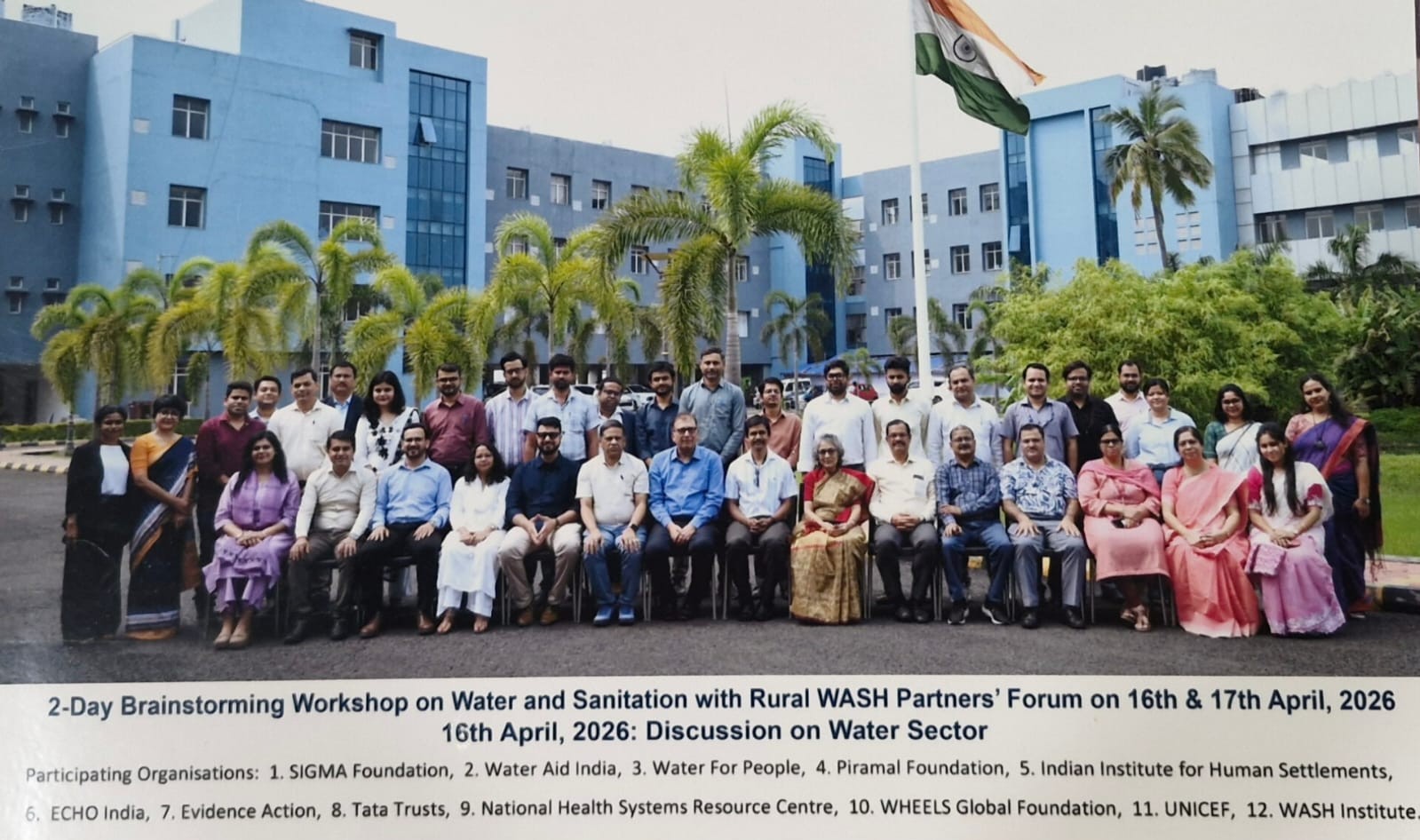 A two-days’ workshop for brainstorming on Water and Sanitation issues on 16th and 17th April 2026. It was organized by the Rural WASH Partners Forum (RWPF) in collaboration with SPM-NIWAS (National Institute of Water and Sanitation), Kolkata and Department of Drinking Water and Sanitation under the Ministry of Jal Shakti, Govt. of India. Day 1 of the workshop focused on the water sector, while Day 2 centred on sanitation, bringing together a wide range of partner organizations including SIGMA Foundation, Tata Trusts, Evidence Action, UNICEF, Water For People, WaterAid, Piramal Foundation, WHEELS Global Foundation,
 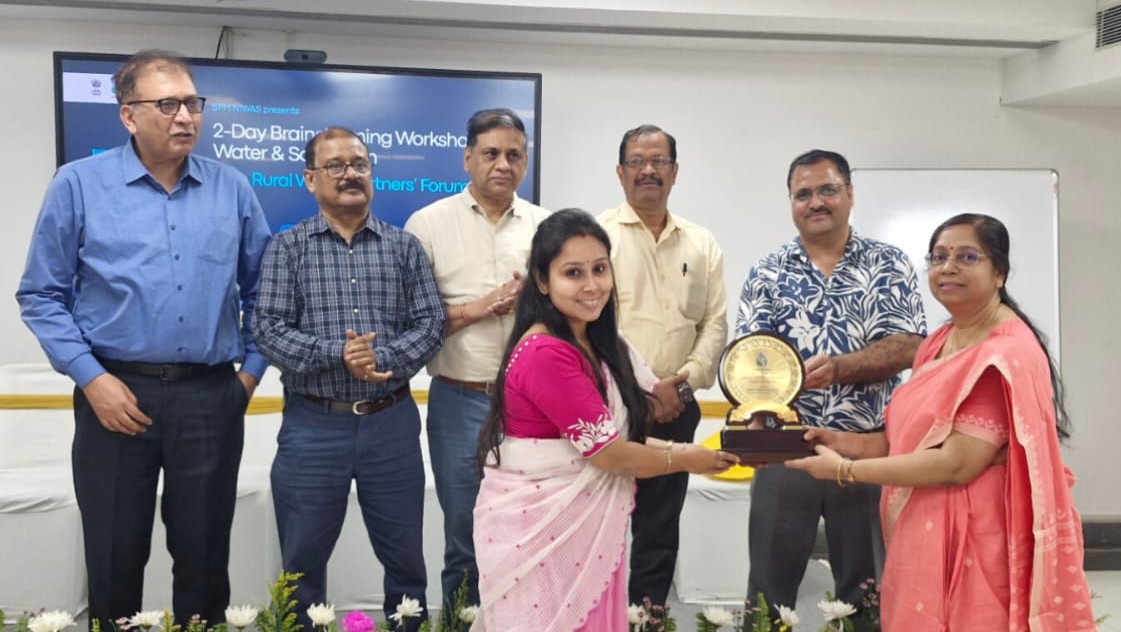 ECHO India, The WASH Institute, Indian Institute for Human Settlements, and National Health Systems Resource Centre, among others. The workshop served as a critical platform to deliberate on sectoral challenges, innovations, and pathways for strengthening sustainable and resilient water and sanitation service delivery systems.
Dr. Debasri Mukherjee, Assistant Director (WASH), and Ms. Sohini Tarafdar, Program Manager, actively contributed to the Day 1 proceedings focused on the water sector, bringing in valuable field-based perspectives and technical insights. Their participation added depth to discussions on governance, sustainability, climate resilience and social & behaviour change. Ms. Sonia Nandi, Senior Technical Officer, 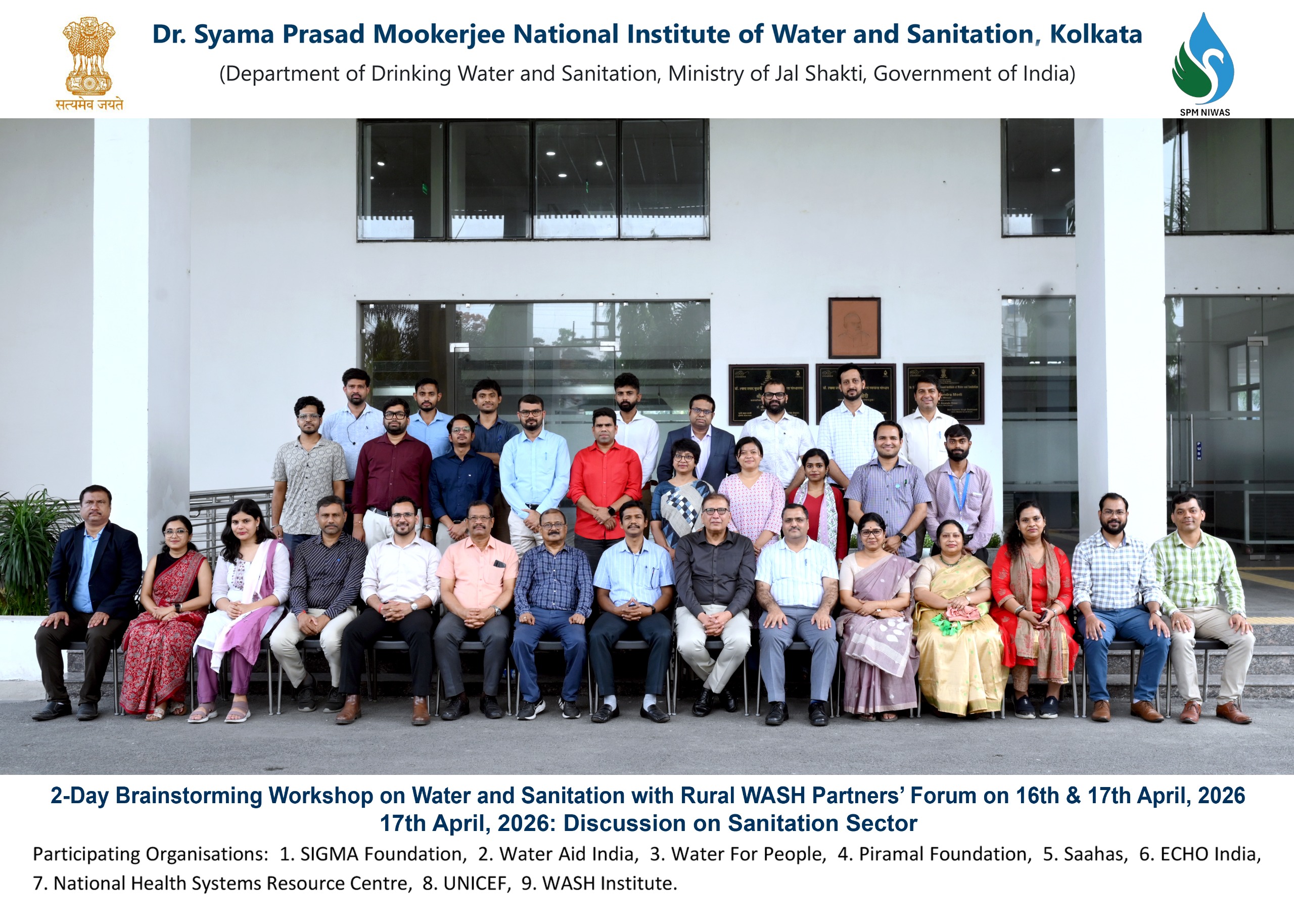 “participated in the Day 2 sessions on sanitation, contributing to deliberations on improving sanitation systems and service delivery. The workshop facilitated rich exchanges among stakeholders, fostering collaboration and identifying actionable strategies to enhance the effectiveness, inclusivity, and long-term sustainability of WASH interventions across the country.
The days concluded with group presentations, an open house discussion on key issues, including functionality, sustainability and future directions under JJM 2.0 and SBM, followed by concluding remarks, felicitation and networking dinner, fostering collaboration among stakeholders.
Tribal Wisdom on Climate-Resilient Futures – Sanlaap-e Sundarban Workshop
Dated 10th April 2026
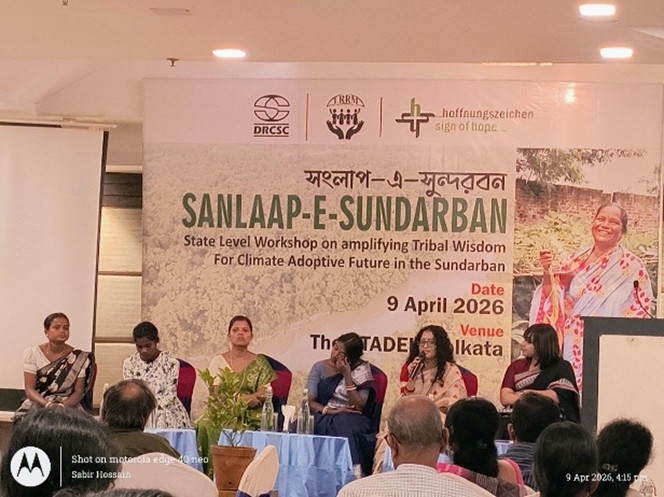 A state-level workshop titled Sanlaap-e Sundarban – Amplifying Tribal Wisdom for a Climate-Adaptive Future in the Sundarbans was held on Thursday, 9th April 2026, at the Stadel, Kolkata. Organized by Development Research Communication and Services Centre and Lokamata Rani Rashmoni Mission, the event brought together experts, practitioners, and community representatives to deliberate on climate resilience and sustainable development in the Sundarbans. Supported by Sign of Hope, the workshop served as a vibrant platform
 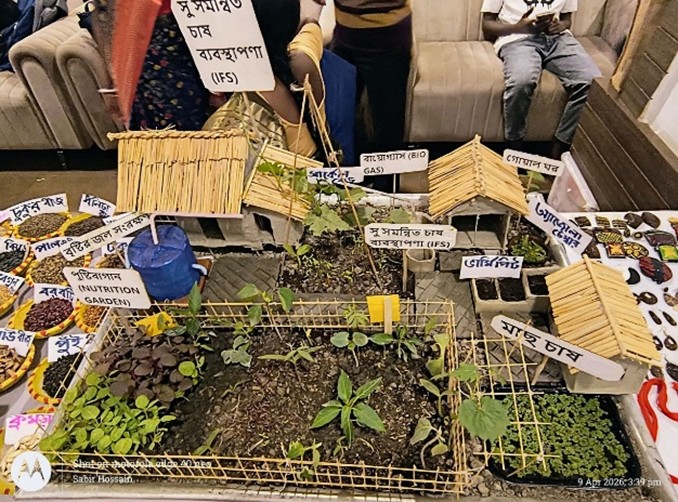 for sharing indigenous knowledge, discussing grassroots innovations, and strengthening collaborative approaches for climate adaptation. Several members of the tribal community living in the Sundarbans including elected Panchayat members.
Mr. Pratik Majumdar, Project Officer and Dr. Sabir Hossain, Research Officer of SIGMA Foundation participated in the meeting. Their contributions significantly enriched the discussions. Drawing from their experiences, they highlighted the critical role of community engagement and the integration of traditional knowledge systems in addressing climate vulnerabilities. Their insights underscored the importance of scalable, inclusive, and locally grounded solutions, reinforcing the commitment of the organizers, donors, and stakeholders toward building a resilient and adaptive future for the Sundarbans with people at the centre.
SIGMA Foundation Invited to a National Consultation on Training Calendar for SPM-NIWAS, GOI
Dated 2nd March 2026
SIGMA Foundation was invited to participate in a One-Day Consultative Workshop for Finalization of the Training Calendar (FY 2026–27) organized by SPM NIWAS (National Institute of Water and Sanitation) under the Ministry of Jal Shakti Government of India.
The consultation brought together selected organizations from 10 states across the country and UNICEF, providing a platform for experts and practitioners to contribute to the development of the upcoming national training framework in the water and sanitation sector.
SIGMA Foundation’s participation reflects its growing role in contributing to sectoral knowledge and capacity-building initiatives at the national level.
SIGMA Foundation Expert Speaks on Poison-Free Farming on National Television
Dated 27th February 2026
A discussion programme titled “Poison-Free Farming and the Next Generation” was broadcast on Doordarshan on 25th February, bringing national attention to the urgent need for sustainable and chemical-free agricultural practices.
Mr. Pratik Majumdar, agricultural expert at SIGMA Foundation and member of the Rural Development Forum, was invited as a key speaker on the programme.
During the discussion, Mr. Majumdar emphasized that the excessive use of chemical inputs in modern agriculture is not only degrading soil health but also posing serious long-term risks to human health and the well-being of future generations. The programme highlighted the growing importance of adopting poison-free and natural farming practices as a sustainable pathway for agriculture.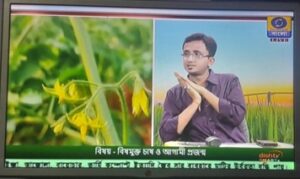
The conversation underscored the broader vision of agricultural sustainability—one that prioritizes:
🌾 Safe and nutritious food
🌾 Healthy and living soil
🌾 Informed and conscious farmers
🌾 A secure future for the next generation
The programme also reinforced the critical connection between agriculture and public health, stressing that sustainable farming practices are essential for protecting both ecosystems and communities.
Such dialogues and initiatives are expected to inspire farmers, policymakers, and citizens alike to move toward more responsible and sustainable agricultural systems.
Research on Farmer-Led Climate Resilience Published in Everything About Water Magazine
Dated 26th February 2026
A research article co-authored by Dr. Debasri Mukherjee, Dr. M. N. Roy, and Ms. Sohini Tarafdar has been published in the January 2026 issue of the prestigious water sector magazine Everything About Water.
Titled “Cultivating Hope in Bundelkhand: Farmer-Led Technological Resilience in a Drought-Stressed Region with High Farmer-Suicide Vulnerability,” the article highlights innovative community-driven solutions addressing water scarcity, agricultural vulnerability, and climate stress in the drought-prone Bundelkhand region.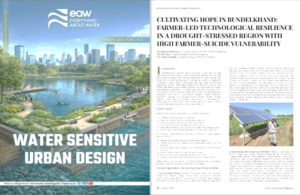
The publication presents a soul- stirring case study on how farmer-led technological and institutional innovations can enhance resilience in regions facing chronic water stress and socio-economic vulnerability. It highlights grassroots adaptation strategies, sustainable agricultural practices, and locally driven technological interventions that strengthen rural livelihoods while addressing water challenges.
The article features work carried out by SIGMA Foundation, marking a significant recognition for the organisation. This is the third time SIGMA Foundation’s work has been featured in Everything About Water, one of the most widely circulated magazines in the water sector in India.
From 200+ Papers to Top 16: Dr. Debasri Mukherjee Presents at National WASH Conference
Dated 23rd February 2026
Dr. Debasri Mukherjee, Assistant Director – WASH at SIGMA Foundation, presented her research work on 16th February 2026 at the National WASH Conference 2026, organised by the Department of Drinking Water and Sanitation (Ministry of Jal Shakti) under the Government of India at the National Institute of Water and Sanitation (SPM NIWAS), Joka, Kolkata. 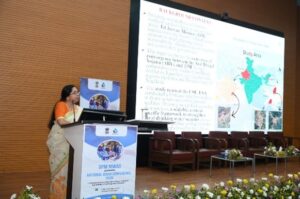
Her paper, developed through her collaboration with California State University, was selected for oral presentation among only 16 papers out of more than 200 submissions, making it a significant recognition at one of the most prestigious national platforms in the water and sanitation sector.
Her participation brought pride to SIGMA Foundation and highlighted the organisation’s growing engagement with global research and knowledge exchange in the WASH sector.
Tribal Women Move Closer to Securing Land Rights in West Bengal
Dated 27th January, 2026
A year-long initiative to strengthen land rights among tribal women in West Bengal has made notable progress in improving awareness, confidence, and access to land administration systems across four districts—Bankura, Purulia, Jhargram, and Paschim Medinipur.
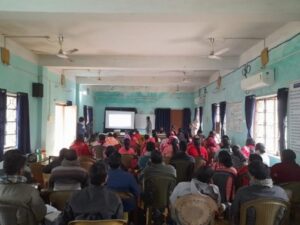 The project, “Empowerment of Tribal Women by Strengthening their Land Rights,” has been very successfully
 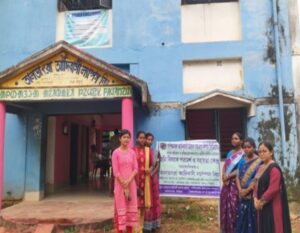 implemented by SIGMA Foundation with support from Landesa, a USA based organization working on land rights across the globe, during January to December 2025. It provided training on land literacy to tribal women to address the long-standing barriers like poor knowledge on land rights and land records, male members of the family not allowing them to participate in land related discussions and on customary inheritance practices, which they face.
Through the Women’s Land Literacy (WLL) programme, 10,007 tribal women from 1,290 SHGs across 63 LAMPS (Large Area Multipurpose Society), have been trained against a target of training 10,000 such women. To raise awareness of the tribal society on women’s land rights, 20,000 bilingual land literacy leaflets (Bengali and Santhali) were distributed via SHGs and LAMPS. Capacity-building efforts included training of 200 District Level Trainers and 150 LAMPS Level Trainers, while 650 SHG-based sessions reached to build capacity of the trainers who took day long training sessions following a specially designed curriculum approved by the Tribal Development Department, Government of West Bengal. The trainings were also supported by the department and the Regional Managers, WBTDCC of the respective district were actively involved in organizing the training.
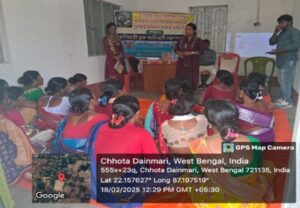
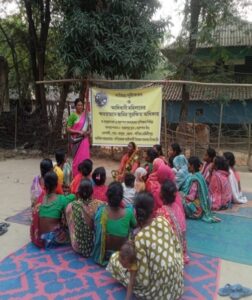 Institutional engagement was strengthened through convergence meetings with BL&LROs and Panchayat representatives and the establishment of a Land Facilitation Centre at Taldangra Adivasi LAMPS Ltd., that helps providing land recordation related services to the people. A web-based MIS and mobile application enabled systematic monitoring of 7,033 participants, complemented by a rapid outcome study involving 278 women.
Findings of the study indicate positive outcomes: as over 90% of participants reported improved understanding of land documentation, and 50.7% verified their land record status online after the training. Women also showed increased confidence in discussing land issues within families and SHGs, with several initiating land record correction and mutation processes. Despite challenges such as administrative delays and continued reliance on intermediaries, the initiative has laid a strong foundation. The next phase will focus on refresher trainings, hands-on digital practice, structured engagement with land officials, and convergence with livelihood programmes to ensure lasting socio-economic benefits for tribal women.
Empowering Gram Panchayat for Evidence-based Planning for Attaining SDGs
Dated: 19th January 2026
SIGMA Foundation has taken a strategy of Gram Panchayat led development by capacitating them in evidence-based planning driven by data and with focus on themes as prescribed under the GPDP (Gram Panchayat Development Plan) Guidelines for attaining SDGs at the local level. SIGMA Foundation is working with several Gram Panchayats which includes Digambarpur GP of Patharpratima block.
The first step is to prepare a baseline by collecting data through a questionnaire-based survey from sampled households to assess the status of development on certain thematic areas, which the Gram Panchayat prioritize. These include issues of Livelihood, Water, Sanitation & Hygiene (WASH), Women Development and Child Development. The GP has also decided to work for attaining zero net carbon emission. So, the questionnaire covers total consumption of energy by the households so that there can be interventions to reduce total carbon emission. 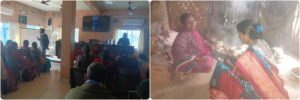
SIGMA Foundation has developed a questionnaire in keeping in mind the priority of the GP and trained volunteers identified by the GP to collect household data under supervision of experts from SIGMA Foundation. A survey of around 400 households has been completed and the data is being analysed by SIGMA Foundation. After that, the baseline status will be presented before the GP functionaries. The findings will be used to prepare GPDP for the year 2026-27 on a few selected themes based on priority of the GP. This will help to monitor progress over time and to know the outcome of planned interventions towards attaining SDGs.
Simultaneously, a Mangrove Change Detection Study (2000–2025) conducted by SIGMA Foundation revealed a net increase of 64 hectares of mangrove cover in Digambarpur GP, rising from 112 ha (3.18%) to 176 ha (4.99%). Despite the overall gain, localized degradation was identified. Five priority mangrove restoration sites have been identified, and the GP will start plantation of mangrove on those sites either directly or through partners.
This integrated effort marks a strong entry point for data-driven, community-led planning, laying the foundation for sustainable development and improved wellbeing in Digambarpur GP.
National Workshop on Participatory / Jan Bhagidari Tools under Jal Jeevan Mission Held in Kolkata
Dated 31st December, 2025
Dr. Syama Prasad Mookerjee National Institute of Water and Sanitation (SPM-NIWAS), Government of India, in collaboration with the United Nations Office for Project Services (UNOPS), organised a National Workshop on Participatory / Jan Bhagidari Tools under the Jal Jeevan Mission (JJM) on 22–23 December 2025 at Zone by The Park Hotel, New Town, Kolkata. The workshop aimed to bring together practitioners, government officials, sector experts, and field functionaries from across States to share, deliberate, and document participatory and Jan Bhagidari tools being adopted at various stages of rural water supply schemes under JJM. 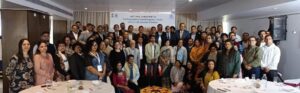 The discussions focused on the application of participatory approaches in planning, implementation, monitoring, operation & maintenance (O&M), and long-term sustainability of drinking water supply systems. A key outcome of the workshop was to contribute towards the development of a national compendium of participatory tools and approaches, capturing best practices, field innovations, and learnings from diverse State contexts to strengthen community ownership and institutional capacity under JJM.
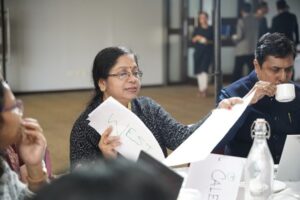 SIGMA Foundation was one of the invitee organization and Dr. Debasri Mukherjee, Assistant Director (WASH), was nominated to attend the workshop on behalf of the organization. During the technical sessions, she highlighted the significance of Participatory Rural Appraisal (PRA) tools in effective planning and implementation of JJM, particularly in ensuring community engagement, inclusiveness, and informed decision-making. Drawing from local and field-level experiences, she emphasized how PRA tools can help identify community-specific challenges, improve service delivery outcomes, and strengthen the sustainability of rural water supply schemes. Her presentation underscored the importance of context-specific participatory approaches, especially in addressing issues related to source sustainability, user behaviour, operation and maintenance, and equitable access. The insights shared contributed to the broader national dialogue on institutionalizing Jan Bhagidari as a core pillar of Jal Jeevan Mission implementation. The workshop concluded with a collective resolve to mainstream participatory tools across States and to strengthen knowledge-sharing platforms to support the goals of safe, adequate, and sustainable drinking water for all rural households.
HERDING HOPE -Dissemination of Outcome Monitoring Survey of BSLD project
Dated 23rd December 2025
The Passing Gifts Pvt. Ltd., a unit of Heifer International, has been implementing the Bihar Sustainable Livelihood Project (BSLD) in 6 districts of North Bihar. The project aims at enhancing the income of around 70,000 households through goat rearing and adopting Climate Smart Agriculture (CSA). An amount of Rs 10,000 is given to a woman, who is a member of a Self Help Group (SHG), as Goat Enterprise Development fund. Once she starts earning the amount is returned to the group, which passes that amount to another member of the group to start goat rearing. For training on goat rearing and CSA, Farmer Field Schools have been established. The project has skilled local youths, mostly women as entrepreneur to provide services related to goat rearing and CSA against fees to earn their livelihood. The project has also established Farmers Producers Organizations (FPOs) for enhancing market linkage and arrange for value-based literacy and holistic community development training.
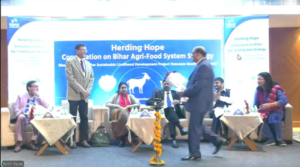
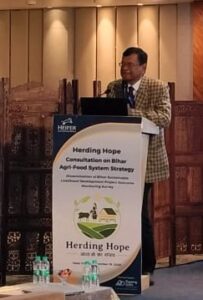
SIGMA Foundation was commissioned as the third party to take up an independent outcome monitoring survey. A mixed method approach was followed for the study. Quantitative data was collected from 854 smallholder farmers, 250 progressive farmers, and 304 entrepreneurs. For collecting qualitative data, 36 Focus Group Discussions were held with 5 types of stakeholders and 90 Key Informant Interviews were conducted with 12 types of stakeholders. The performance of the project was assessed using a few global indicators of Heifer International linked to SDGs and some project specific indicators. Based on these indicators, the project was found to have performed very well. 24% households had closed the living income gap (USD2.15 per capita per day) and 53% were on the path of closing the gap. There has also been a remarkable improvement of the status of women who participated in the BSLD.
The findings of the project were disseminated in a workshop at Patna on the 19th December, 2025, which also discussed the Bihar Agri-food System Strategy. Dr. N. Vijay Lakshmi, IAS and Additional Chief Secretary Dairy, Fishery & Animal Sciences was the Chief Guest. Dr Siddharth, the former Development Commissioner of Bihar, other officials of Bihar Government, academicians from Bihar Animal Science University and representatives of several reputed NGOs working in Bihar participated in the workshop. Dr. M. N. Roy (President) and Mr. Sangram Mukherjee (Assistant Director MEL) of SIGMA Foundation participated in the workshop. The findings of the OMS of the BSLD project were presented by Dr Roy, which was much appreciated.