
-
Opening hours
Mon - Fri: 10 am - 6 pm -
Email
info@sigma.foundation -
Call us
+91 33 3152 2348 / +91 33 4007 6685
News
SIGMA Foundation Joins Hands with ADDCWES – IIEST, Shibpur for Providing Sustainable Access to Water
Dated 15th December 2025
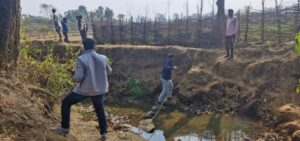 A unique centre for water and environment studies, named (Arun and Dhriti Deb Centre for Water and Environmental Studies) has been established at IIEST, Shibpur, a prestigious engineering college of the country. SIGMA Foundation has entered into a non-financial agreement with the centre to work together for a pilot project of harvesting rainwater in Jajuhatu village within Mathari Khamar Gram Panchayat of Jhalda I block. The harvested water will be used to strengthen agriculture and livelihood of the village.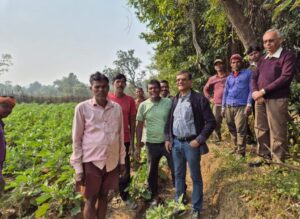
The high-level engineering skill of IIEST and SIGMA Foundation’s extensive experience in water security, climate adaptation, and natural resource management across multiple states, will provide a technically sound and socially acceptable solution to the acute water crisis of the area. A check dam to harvest rainwater will be constructed to start with in Jajuhatu village.
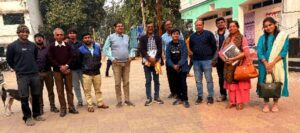
The project site was visited by a team of ADDCWES and SIGMA Foundation on the 12th December 2025. The team spoke to the villagers, met the elected representatives including the Pradhan of the Gram Panchayat and the BDO along with some other officials of Jhalda I block. The visit will be followed by design of the check dam structure and a survey of the households who are going to be benefitted from the impounded water of the check dam and the check dam will be constructed before the coming rainy season.
SIGMA Foundation Shines on Global and National Platforms with Notable Academic Contributions
Dated 3rd December, 2025
SIGMA Foundation marked a significant presence in both international and national academic arenas through two distinguished scholarly engagements in November 2025. On 17 November 2025, Dr. Debasri Mukherjee, Assistant Director, WASH, SIGMA Foundation, India, delivered a keynote lecture at California State University, San Bernardino, USA. Speaking on “Resilient Water Futures: Tackling Scarcity and Building Sustainability in India’s Changing Climate”, Dr. Mukherjee emphasised the urgency of addressing emerging climate challenges and presented her insightful “think global, act local” framework. 
 The lecture was widely appreciated by international experts and formed an integral part of an academic programme featuring eminent scholars such as Dr. Velvet Nelson (Sam Houston State University), Prof. James Mulvihill (Institute for Watershed Resiliency, CSU), Prof. Rowland, Prof. Spatial Thinkers, and Prof. Jose Muñoz of CSU.
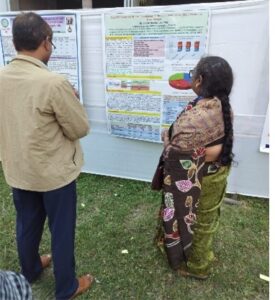
Continuing the Foundation’s academic momentum, Dr. Sabari Bandyopadhyay, Senior Economist, SIGMA Foundation, presented a research paper titled “Sankalp Themes for Rural Population: A Study in Some Gram Panchayats in West Bengal” at the 46th Annual Conference of the Indian Association for the Study of Population (IASP). The conference, themed “People, Planet, Prosperity: Demographic Drivers of India’s Inclusive Growth”, was organised by the National Atlas & Thematic Mapping Organisation (NATMO) in collaboration with the Anthropological Survey of India (AnSI) and held from 27–29 November 2025 in Kolkata.
These dual achievements underscore SIGMA Foundation’s growing strength in advancing research, thought leadership, and collaborative knowledge-sharing across disciplines—from water resilience and climate action to rural development and demographic studies.
SIGMA Foundation completes Outcome Monitoring Survey of Bihar Sustainable Livelihood Development (BSLD) Project
Dated 4th November 2025
SIGMA Foundation has successfully completed Outcome Monitoring Survey of Bihar Sustainable Livelihood Development (BSLD) Project implemented by Heifer International through its partner, Passing Gifts Private Limited (PGPL). The project was launched in 2020 to enhance the livelihoods of 71,000 smallholder farmers—with a particular focus on women farmers—across 21 blocks in six districts of Bihar: Madhubani, Sitamarhi, Darbhanga, Samastipur, Vaishali, and Muzaffarpur.
At its core, the project was built on two strategic pillars: a) Scientific goat management and sustainable market linkages to promote resilient, livestock-based livelihoods; and b) Climate-smart agricultural practices to increase productivity while fostering environmental sustainability.
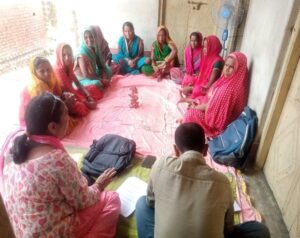
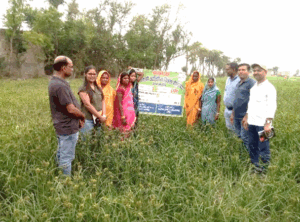
The independent evaluation was conducted over a six-month period, adopted a mixed-methods research approach. It involved a quantitative survey of 1,458 farmers and extensive qualitative assessments through 36 Focus Group Discussions (FGDs) and over 90 Key Informant Interviews (KIIs). Stakeholders consulted ranged from district and block-level administrators to agriculture university experts, veterinary officers, and community-based organization leaders—offered a comprehensive view of the project’s multidimensional impact. The evaluation was anchored in the OECD-DAC framework, examining the project’s relevance, effectiveness, efficiency, impact, and sustainability.
The outcome of this evaluation helped to identify the status of outcomes of the interventions like increase in income, food security, participation of women in decision making of the household, adoption of climate smart practices in terms of Global Index of Heifer International and relevant Project Specific Indicators (PSIs) covering various aspects of the interventions like advanced goat management practices, market linkage through FPOs, training through Farmer Field School, fodder cultivation, performance of the entrepreneurs to provide support to the farmers etc. Based on the study findings, SIGMA Foundation provided a set of short-term and long-term recommendations to help Heifer International refine its future interventions and scale up the unique model across Bihar and beyond.
Two comprehensive evaluation reports and a concise summary brief have been submitted to Heifer International, encapsulating field findings, data-driven insights, and actionable recommendations for policy and program design.
SIGMA Foundation successfully evaluates JSCF’s WASH interventions across Odisha and West Bengal
Dated: 8th October, 2025
SIGMA Foundation proudly announces the successful completion of a third-party evaluation of Water, Sanitation, and Hygiene (WASH) facilities implemented by Jal Seva Charitable Foundation (JSCF), the operating arm of Water Aid India, across select districts of Odisha and West Bengal—accomplished within an impressive record time of just three weeks.
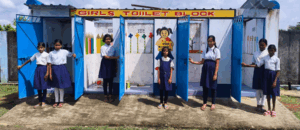
The evaluation combined rigorous technical assessments with in-depth qualitative research to measure both the quality and sustainability of the infrastructure and the extent of community engagement. SIGMA’s multidisciplinary team of civil engineers and social scientists inspected a wide range of facilities, including piped water supply systems, borewells, rainwater harvesting structures, toilets (including inclusive facilities for persons with disabilities) involving new technology like BANKA toilet and toilets using Evapotranspiration for sludge management, greywater management systems which included DEWAT schemes and use of Johkasou technology, and school handwashing stations.
The rapid yet thorough assessment demonstrates SIGMA Foundation’s ability to deliver high-quality, actionable insights under tight timelines. The evaluation provides a clear roadmap for enhancing sustainability, transparency, and community ownership of WASH facilities. This achievement reinforces the role as a trusted partner in supporting effective, impactful, and timely interventions that transform rural lives and strengthen WASH governance across India.
SIGMA Foundation to Evaluate the World Bank Assisted WBADMI project as a Partner of IRMA-TSU
Dated: 3rd October 2025
In the year 2012, the World Bank extended support to the Government of West Bengal for implementing the West Bengal Accelerated Development of Minor Irrigation (WBADMI) project. The goal was to provide assured irrigation by creating minor irrigation infrastructure and organizing the farmers in the command area to form Water Users’ Associations (WUAs) to manage and maintain the irrigation system. The first phase of support, lasted until 2019. The state government continued similar initiatives with its own funds until 2023. All these led to benefit of around 1 lakh farmers through creation of irrigation potential of 67,000 ha of land and 2,837 WUAs were formed. Agriculture Support Services were provided to enhance crop production and diversification with climate resilience. The World Bank has committed another round of support from December 2023 to June 2029 to irrigate more areas and form around 1100 more WUAs. But before moving ahead, both the World Bank and WBADMI recognized the need to pause and reflect—how well have the WUAs performed, and what lessons can be drawn to guide better management of irrigation water, enhancing crop production with climate resilience and enhancing farmers’ income?
To answer these questions, the State Project Management Unit has commissioned the Institute of Rural Management Anand (IRMA), now restructured as Tribhuvan Sahkari University (TSU) to take up an evaluation. TSU has, in turn, partnered with SIGMA Foundation to conduct the fieldwork.
The evaluation will have two components. The first one will be to assess the performance of both first phase and second phase WUAs, covering governance of the WUAs, their role in strengthening agriculture and building climate resilience. The study will also come out with some Key Performance Indicators for evaluating performance of the WUAs to strengthen the monitoring system for the project. The second component will be conducting a diagnostic study to understand the causal factors behind poor performance of the WUAs and to know the factors which enable better performance of the WUAs. This study will also serve as a baseline for measuring the project’s long-term impact at the end of the project.
SIGMA Foundation has prepared a mixed method approach and worked out detailed methodology in consultation with IRMA to collect both quantitative and qualitative data to be followed by analyses of the data for evaluating performances of the WUAs and assessing how the project has improved agricultural production and income of the farmers and their level of adoption of climate resilient practices. The field work for the project is to start from the next week and is expected to be completed by the month of December 2025.
SIGMA Foundation presents their research works in the 30th International Population Conference at Brisbane, Australia
Dated: 25th July 2025
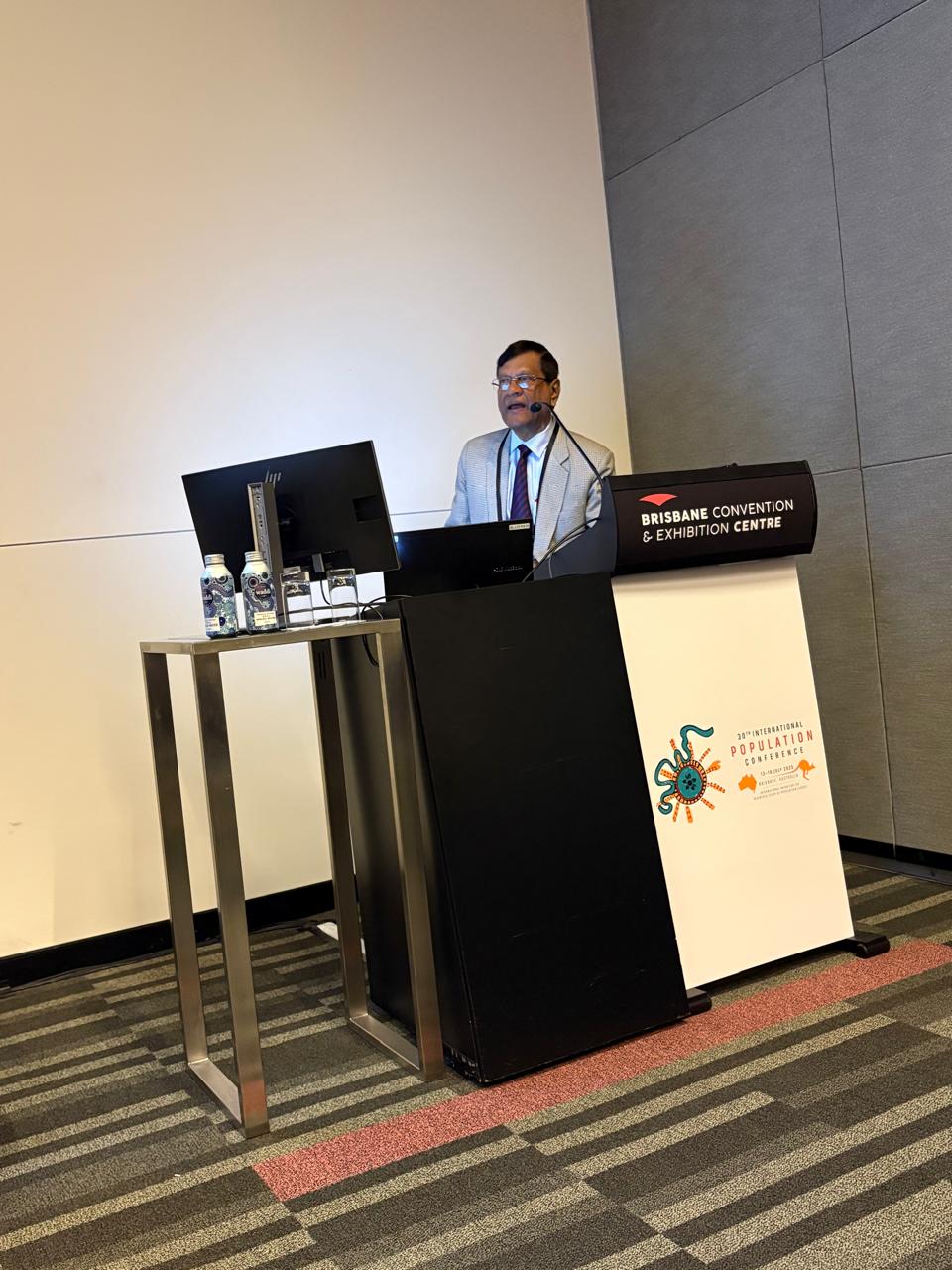
 SIGMA Foundation is proud to report that two of its members – Dr. M.N.Roy, President of the organization and Dr Ankita Chakraborty, Gender and Health Specialist, attended the 30 th International Conference of the International Union for the scientific Study of Population (IUSSP) held at Brisbane, Australia from the 13 th to 18 th July 2025. Both are members of the IUSSP.
Dr Roy presented a paper (authored by Dr Roy and Dr Chakraborty) “Exploring the role of gender perceptions and practices in facilitating women-friendly development initiatives by the rural local governments of West Bengal, india” in the session on “Policy and Governance as Factors Affecting Women’s Empowerment”. The presentation was much appreciated by the participants. The paper is based on qualitative data collected from 45 elected Gram Panchayat functionaries and members of 9 Gram Panchayats across 3 districts of the state of West Bengal.
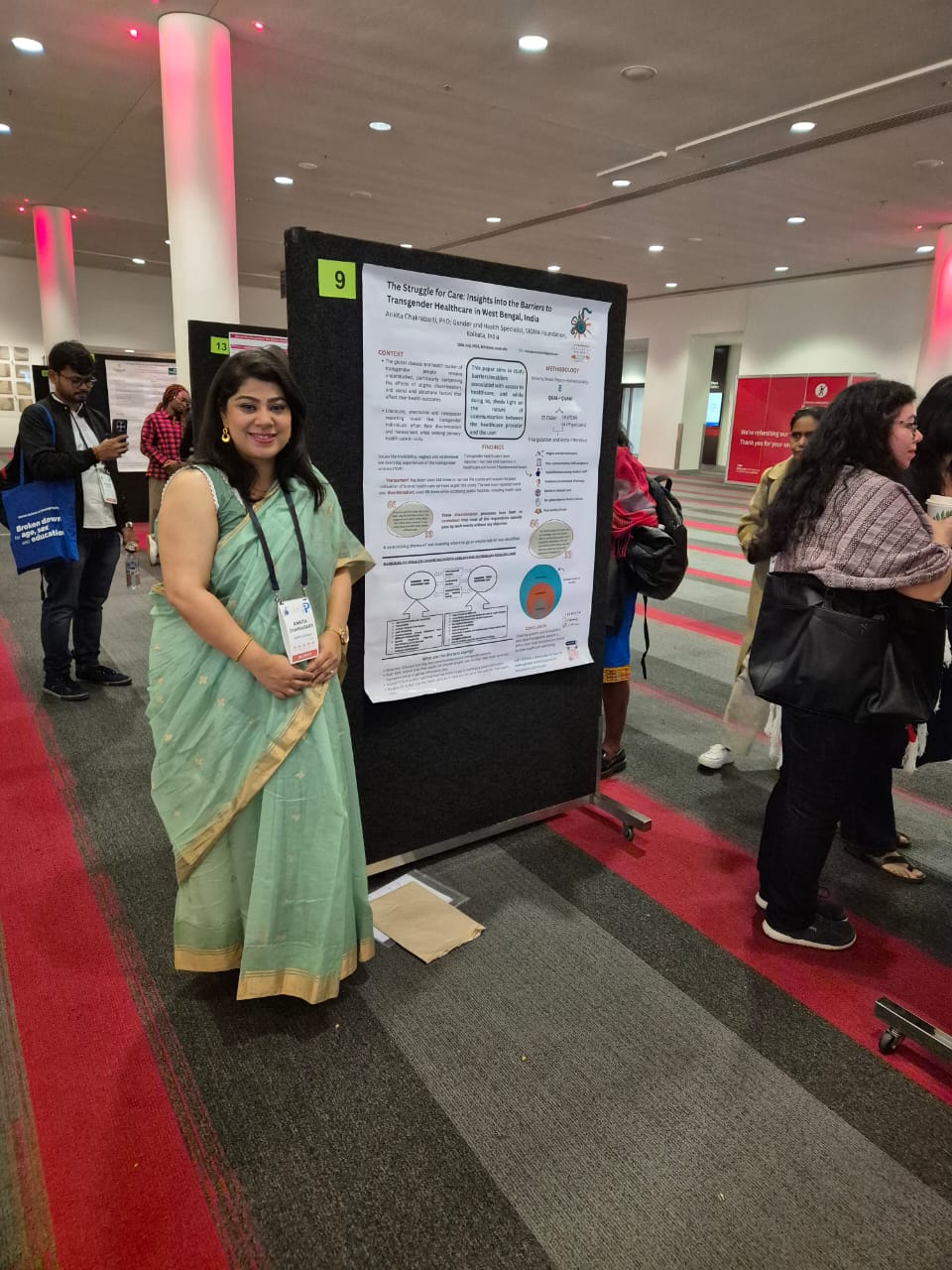 Dr Ankita Chakrabarti had a poster presentation on “The struggle for care: insights into the barriers to transgender healthcare in West Bengal, India”. This paper is based on collection of primary data from 81 transgender persons and 54 physicians. The paper is unique as it deals with the healthcare of one of the most marginalized communities who remains deprived from healthcare services and there is little understanding of the issues faced by them. The team gained experiences in attending several sessions during the conference and interacting with the researchers and organizations from across many countries of the world.
Digital Monitoring of Rural Piped Water Supply System: A Pilot Initiative by SIGMA Foundation with the support of UNICEF and PHED, Govt. of West Bengal
Dated: 30th June 2025
A sensor-based Drinking Water Monitoring System (DWMS) using IoT (Internet of Things) technology has been successfully piloted across 10 locations covering various water supply schemes in Health Care Facilities (Rural Hospital and Health & Wellness Centres) and remote villages across 3 blocks of Howrah, Paschim Medinipur, and South 24 Parganas districts in West Bengal. 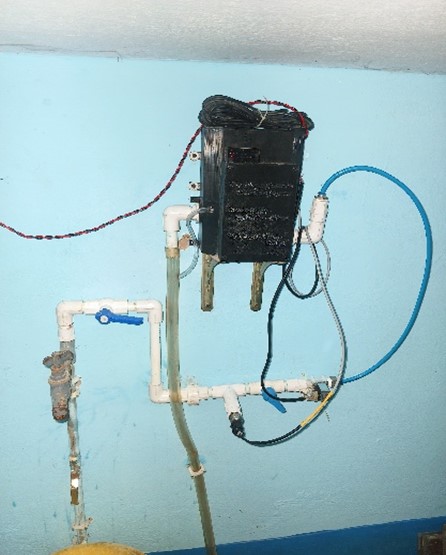 The system monitors critical service delivery parameters such as water pressure, residual chlorine, total dissolved solids (TDS), turbidity, pH, and temperature in real-time. For remote Single Village Schemes (SVS) Public Health Engineering Department (PHED) expressed their need to monitor pump running hours and water lifted in the reservoir, which has been implemented in 2 SVS schemes in Ghatal block of West Midnapur district.
The initiative started in 2022 with the installation of two IoT-based sensor modules in the Amta-II block of Howrah to track water quality and service delivery metrics. Encouraged by the pilot’s success, the project was expanded in 2024 to additional locations, including HCFs and 2 remote SVSs.
Data is collected three times daily and transmitted to a central dashboard hosted by SIGMA Foundation, enabling real-time visualization and analysis. This is proposed to be integrated with PHED systems for use of the data in monitoring the scheme and decision support.
This initiative demonstrates the transformative potential of digital technology in strengthening rural water governance—enhancing efficiency, accountability, and safety in service delivery. It marks another significant milestone by SIGMA Foundation in advancing the goals of the Jal Jeevan Mission in West Bengal through a technology-driven, smart water quality surveillance system.
The intervention is implemented by SIGMA Foundation as a partner of UNICEF and in collaboration with PHED, West Bengal.
“Why children come in conflict with law”- SIGMA Foundation is to take up a study on Rising Juvenile Crime in Odisha in Partnership with UNICEF Odisha Field Office
Dated: 21st May 2025
There is an increasing trend of juvenile crimes in India. In this context, a study, titled “Why Children Come in Conflict with Law,” has been initiated by the Government of Odisha. The study will explore the vulnerabilities, causal factors, rehabilitation prospects of Children in Conflict with Law (CICL) and will also recommend measures for reducing incidences of children coming in conflict with law. UNICEF Bhubaneswar state office is the partner of the Government of Odisha in conducting the study. SIGMA Foundation has been commissioned by UNICEF Odisha to conduct the study.
A mixed-method approach will be followed for this study, which aims to generate a nuanced understanding of both the causal factors and systemic gaps for appropriate interventions. Sound methodology, experienced researchers and ethical protocols to maintain child safety and confidentiality are core principles guiding such research process. A team of experts on child protection, psychiatry and research methodology will take up the study. The team is now working on the Inception Report and the Study Tools for obtaining ethical clearance from an Independent Review Board (IRB) after which field work will start.
The outcomes of the study are expected to inform key policies and programs on juvenile justice and child protection in Odisha.
SIGMA Foundation to provide service as PMU under a World Bank supported project
Dated: 30th April 2025
The Government of West Bengal is implementing a project named “West Bengal Building State Capability for Inclusive Social Protection for Empowerment of Women” through multiple interventions. The project is financed by International Bank for Reconstruction and Development (IBRD) and is being implemented by the Finance Department of the Government of West Bengal with support of other departments like Women & Child Development & Social Welfare Department, Health & Family Welfare Department etc. A Project Management Unit with various experts is to be established to support all project activities. SIGMA Foundation along with BDO LLP India (lead partner) jointly submitted bid for establishing the PMU and we have been selected to establish the PMU and extend other supports. The PMU has been put in place and will support implementation of the project for the next two years, the time period of the project.
SIGMA Foundation is very proud to be associated with this project which is expected to shape the development of women in West Bengal leading to both social and economic benefits of the women and prosperity of the state.
SIGMA Foundation Conducted Landscape Study on Education, Skilling, and Employment of Young Women in Maharashtra
Dated: 11th March 2025
SIGMA Foundation has successfully conducted a comprehensive landscape study on the education, skilling, and employment of young women (15 to 29 years) in Maharashtra for Foundation to Educate Girls Globally. The study aims to assess the challenges and opportunities for young women who are Not in Education, Employment, or Training (NEET) and to explore viable pathways for their reintegration into the education system and workforce.
Educate Girls, through its Project Pragati, has adopted an innovative approach to addressing this issue by strengthening state open schools. The initiative focuses on providing alternative education routes for school dropouts, coupled with vocational training and life skills development. This model offers a cost-effective and accessible solution for young women compared to traditional interventions.
The study assesses the number of such women, evaluates demand and access to alternate schooling, the delivery of education services through open schools, and the key enablers and challenges affecting NEET women. It also presents a roadmap for increasing demand for secondary education among school dropouts and enhancing the capacity of the Open Schooling system to meet this demand through targeted advocacy and policy recommendations.
Using a mix of quantitative and qualitative research techniques, the study draws insights from secondary data sources and stakeholder consultations. The findings were compiled into a detailed report, which was submitted to Educate Girls. As part of the study’s outreach, Mr. Sangram Mukherjee, Senior Project Officer at SIGMA Foundation, presented key insights and recommendations to the officials from Department of School Education and Sport, Government of Maharashtra and State Council of Educational Research and Training, Maharashtra at Maharashtra Rajya Pariksha Parishad office at Pune.
This initiative marks a significant step toward expanding educational opportunities for young women, equipping them with the skills needed to transition into meaningful employment, and fostering long-term social and economic empowerment.